AI anomaly detection
Build an AI-powered anomaly detection system that learns your baseline, flags anomalies early, and protects you from risk.
Talk to our expertsBuild an AI-powered anomaly detection system that learns your baseline, flags anomalies early, and protects you from risk.
Talk to our expertsOur Clients




Modern business systems continuously generate large data streams that also capture subtle deviations that can indicate potential risk. These deviations include events such as unusual financial transaction patterns, shifts in equipment performance, or irregular patient readings. Due to high data volumes and the nature of these variations, these events go undetected by manual checks and rigid rule-based systems. AI anomaly detection identifies such deviations as they occur and flags irregular patterns that signal larger issues. With 21 years of software expertise, Softweb Solutions develops AI-powered anomaly detection systems that learn your operational baseline and adapt in live environments. Our team of 120+ AI and data specialists combines machine learning depth with domain knowledge in sectors such as manufacturing, finance, healthcare, supply chain, and energy. We build and deploy systems that analyze your data in real time and deliver alerts with context. Our systems integrate with your existing tools and improve accuracy as they process more of your operational data.

Our system learns what normal data looks like in your operations, then flags anomalous events when data deviates from that pattern. This serves as a self-learning detection layer tailored to your business environment.

Real-time detection enables rapid response to fraud, failures, and cyberattacks. Batch detection is useful for generating strategic insights by reviewing historical data to uncover trends and seasonal patterns that inform planning decisions.

When an anomaly is detected, the system shows what caused it by mapping relationships between data elements. This helps you resolve issues faster and prevent them from happening again.

Our system learns from each detection and improves over time. It automatically adjusts to changing demands and evolving business patterns without requiring manual updates.

Receive alerts through your preferred channels like email, team collaboration tools, or incident management systems. This ensures critical anomalies reach the right teams immediately for prompt response.

Integrates with databases, sensors, cloud platforms, and business applications. This creates a seamless data flow that builds one unified view of anomalies across your operations.
Identify baseline shifts and unexpected changes early so your teams can resolve them proactively across critical systems.
Discuss your requirements
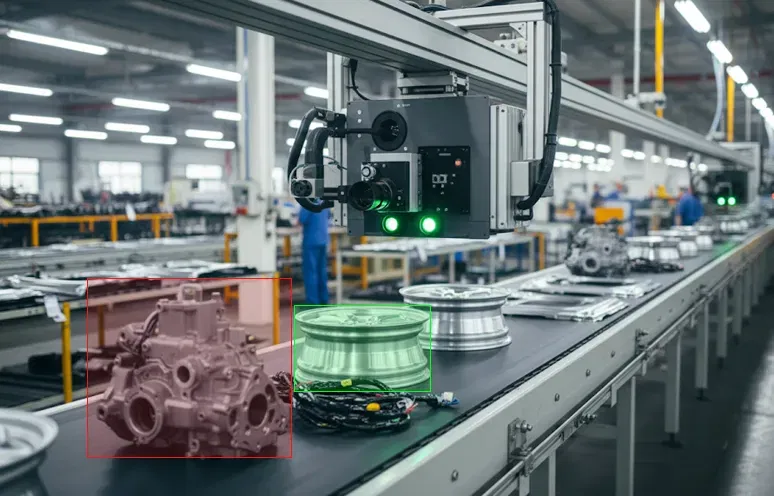
Production generates massive data volumes from equipment, assembly lines, and quality systems. This data includes anomalies that indicate equipment degradation, process drift, and quality decline. Detecting these data anomalies early prevents costly failures and recalls.
Financial institutions process millions of transactions daily. Monitoring across accounts, channels, and devices surfaces fraud risk and operational issues. Identifying these unusual transaction patterns in real time catches issues before they cause losses.


Shipment tracking, inventory systems, and demand forecasts produce continuous data streams. Anomalies in shipment data reveal delays, while inventory anomalies indicate stock issues. AI agents for anomaly detection monitor these patterns across your entire network.
Our system collects data from sensors, logs, transactions, and applications. Every time new data is generated, the system cleans and organizes the data before ingestion and analysis. This ensures models receive consistent, high-quality inputs that improve detection accuracy.
Different data types need different approaches. Numerical readings from sensors work with statistical methods. Transaction records need pattern recognition. Event logs require deep learning. The system selects the method that matches your data characteristics for accurate anomaly identification.
Our system creates a baseline using your historical data. This baseline captures what normal operations look like, accounting for seasonal patterns, typical variations, and expected business cycles that define your operational patterns and cycles.
For scenarios requiring immediate attention like potential fraud, real-time anomaly detection flags unusual transaction patterns to enable instant action. Meanwhile, batch processing analyzes larger datasets over time to uncover subtle trends that support strategic planning and long-term optimization.

Our machine learning models learn what normal data looks like, then identify data that doesn’t fit established patterns. Some models train on labeled examples of normal and anomalous data to build detection rules. Others discover patterns without any labeled examples, which is helpful when new anomalies emerge.

Our deep learning systems analyze complex data that traditional methods struggle to process effectively. They work well for images, time series data, and large unstructured datasets. We deploy autoencoders that learn normal patterns and recreate them. When the system cannot reconstruct incoming data well, that signals a likely anomaly requiring investigation.

We deploy streaming platforms that continuously capture and process data as anomalies emerge. These systems validate incoming data quality, handle high-velocity inputs from sensors and applications, and route anomalous data for immediate analysis. This real-time processing enables instant detection of data anomalies that require urgent response.

We apply statistical techniques to identify values that deviate significantly from expected norms in your structured data. Clustering approaches group similar data points together. Points that fall far from any established cluster indicate potential anomalies requiring investigation and response.

We prepare your data by removing inconsistencies, handling missing values, and standardizing formats across different sources. Our feature engineering extracts meaningful attributes that improve detection accuracy. Normalization ensures different data scales work together effectively, while dimensionality reduction preserves critical information in complex datasets.

We implement distributed frameworks to process datasets that are too large for single systems by splitting analysis across multiple machines. Our cloud-based infrastructure automatically scales to handle growing data volumes, supporting both real-time streaming for immediate detection and batch processing for comprehensive trend analysis.
Build a detection system that scales with your operations Our experts can build a pilot solution, then extend across sites and data sources with shared models, monitoring, and governance.
Connect with our experts
Fraud detection and prevention
Identify unusual transaction patterns that indicate fraud before financial losses occur
Operational inefficiencies
Identify performance gaps and process slowdowns affecting productivity and costs
Quality control issues
Catch product defects during production before they reach customers
System downtime and outages
Predict equipment and system failures before they cause service interruptions
Anomalies in billing, pricing, or transactions
Detect unusual patterns in billing and pricing that indicate errors or data problems
Customer churn and behavior shifts
Recognize when customer activity patterns shift, indicating risk of attrition

AI models find complex patterns that rule-based systems cannot detect effectively. This improved pattern recognition means fewer false alarms, allowing your teams to focus on genuine problems requiring attention.

Process thousands of data points per second across distributed systems. This high-volume processing maintains detection accuracy regardless of data volume growth.

The system adjusts to peak volumes during busy periods and lighter loads during slower times. It handles these fluctuations without manual reconfiguration, maintaining accuracy through changing business conditions.

Context-aware analysis distinguishes genuine problems from normal variations in your operations. This precise filtering reduces false alarms and helps teams investigate only issues that truly matter.

Automated monitoring reduces manual oversight requirements while maintaining vigilance. Early detection prevents expensive failures and fraud losses, delivering measurable ROI through operational improvements.

Anomaly insights become actionable intelligence for strategic planning and continuous improvement. This data-driven approach supports better risk management and informed decision-making.

Backed by 21 years of software expertise and a decade of AI specialization across manufacturing, finance, healthcare, and enterprise operations.
Our engineers bring expertise in machine learning, statistical modeling, deep learning, and big data processing specific to anomaly detection challenges.
Aligned with Azure, AWS, Google Cloud, Databricks, and modern data platforms enabling scalable, enterprise-grade detection systems.
We manage every phase from data architecture and model development through deployment, integration, and ongoing optimization.
Experience building detection frameworks that address industry regulations, compliance requirements, and operational nuances across sectors.
Our methodology includes performance monitoring, feedback integration, and model retraining protocols maintaining accuracy as patterns evolve.
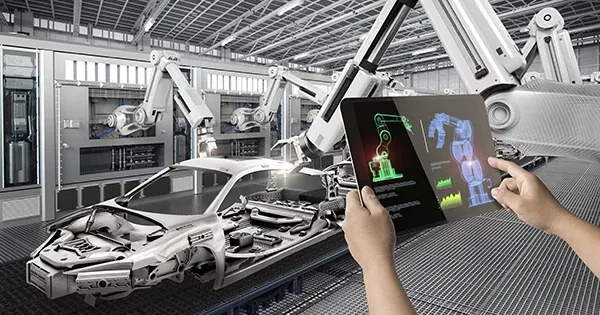
We developed an anomaly detection solution for our client to identify defects in various processes carried out by factory robots. This helps them with preventive maintenance, which ensures that the robots keep running smoothly and efficiently. By using our approach, they were able to reduce unplanned downtime, ensure workers’ safety and build seamless manufacturing processes.
Industry
Supply Chain
Technologies
Computer vision, AI, Python, OpenCV, TensorFlow, Azure cloud for MLOps
Challenges
Business impact
Client
A leading logistic company based in US

Industry
Semiconductor
Technologies
Python, TensorFlow, Keras, Azure Blob Storage
Challenges
Business impact
Client
A large-scale manufacturer of semiconductors
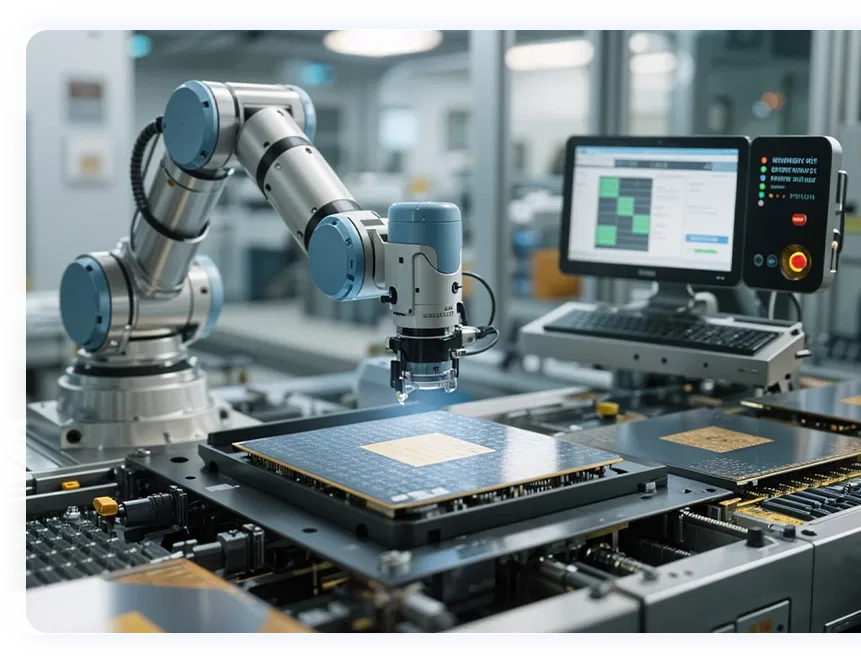
AI anomaly detection is the process of using machine learning and deep learning to identify data anomalies. These are data points or patterns that deviate from what’s normal in your business. The system learns what normal data looks like from your historical information, then continuously monitors new data. When data deviates significantly from the normal pattern, it’s flagged as an anomaly for investigation.
AI anomaly detection delivers value across multiple industries. Manufacturing uses it for predictive maintenance and quality control; finance for fraud and transaction monitoring; healthcare for patient and billing oversight; cybersecurity for network threats; supply chain for logistics and inventory; energy for grid and asset health.
AI systems detect three types of data anomalies. Point anomalies are single outliers, like a sudden transaction spike or abnormal sensor reading. Contextual anomalies look normal overall but are unusual in a context, like high traffic at midnight. Collective anomalies are unusual groups, like coordinated suspicious transactions.
Common approaches include isolation forests, which separate unusual data from normal data, and autoencoders, which learn to reconstruct normal data and flag items they can’t reconstruct. LSTM networks analyze time series data patterns. Statistical methods identify data that deviates from expected distributions. Clustering algorithms group similar data and flag points that don’t fit any group.
Traditional rule-based systems require manual setup of thresholds and rules. When your business changes or new types of anomalies emerge, these rules become outdated. AI anomaly detection learns from your data automatically, adapts to changes, and handles complex patterns that rule-based systems can’t capture. The result is fewer false alarms and faster detection of new problems.
Your system needs historical data showing normal operations in your business. Ideally, this spans seasonal cycles and typical variations. The data should include timestamps, measurements, categories, and context about what was happening. The amount varies by complexity. Simple operations may need weeks of data, while complex environments benefit from months or years of history for accurate pattern learning.
Yes, modern solutions integrate with business intelligence platforms like Tableau, Power BI, and Looker. They connect to alerting systems like Slack and PagerDuty. APIs enable connections to ticketing systems, ITSM tools, and automation platforms. Data flows to data warehouses and security information platforms through standard connections.
Monitor operations with intelligence that learns and evolves
Deploy an AI anomaly detection solution that learns your baseline, continuously adapts, and alerts before deviations impact operations.
 All our projects are secured by NDA
 100% Secure. Zero Spam.
By submitting this form you agree with the terms and privacy policy of Softweb Solutions Inc.